
Includes AI-assisted illustrative visuals and synthetic Mandarin narration; not documentary event footage.
Watch on YouTube ↗SINGING BOWLS · LOVE & PEACE SPACE
Singing Bowls and Relaxation: What Can Science Tell Us?
Making room for personal experience while understanding the limits of research
Why do some people feel more relaxed while listening to singing bowls? Explore personal experience, attention and the limits of early research.
Published
- Acoustic frequency and electrical brain activity are different concepts.
- Small studies offer preliminary clues about short-term relaxation; mechanisms and lasting effects require further research.
- Warmth, heaviness or dozing off do not, by themselves, demonstrate a treatment effect.
At a first singing-bowl session, people sometimes wonder why listening to sound can leave them feeling heavier, quieter or more at ease.
Some notice warmth or a sense of release. Others simply rest, and some doze off. Those experiences can be meaningful without having a single explanation such as “frequency makes the body resonate.”
We can value how we feel while speaking carefully about the relationship between sound and relaxation.
1. Listening to sound, noticing the body
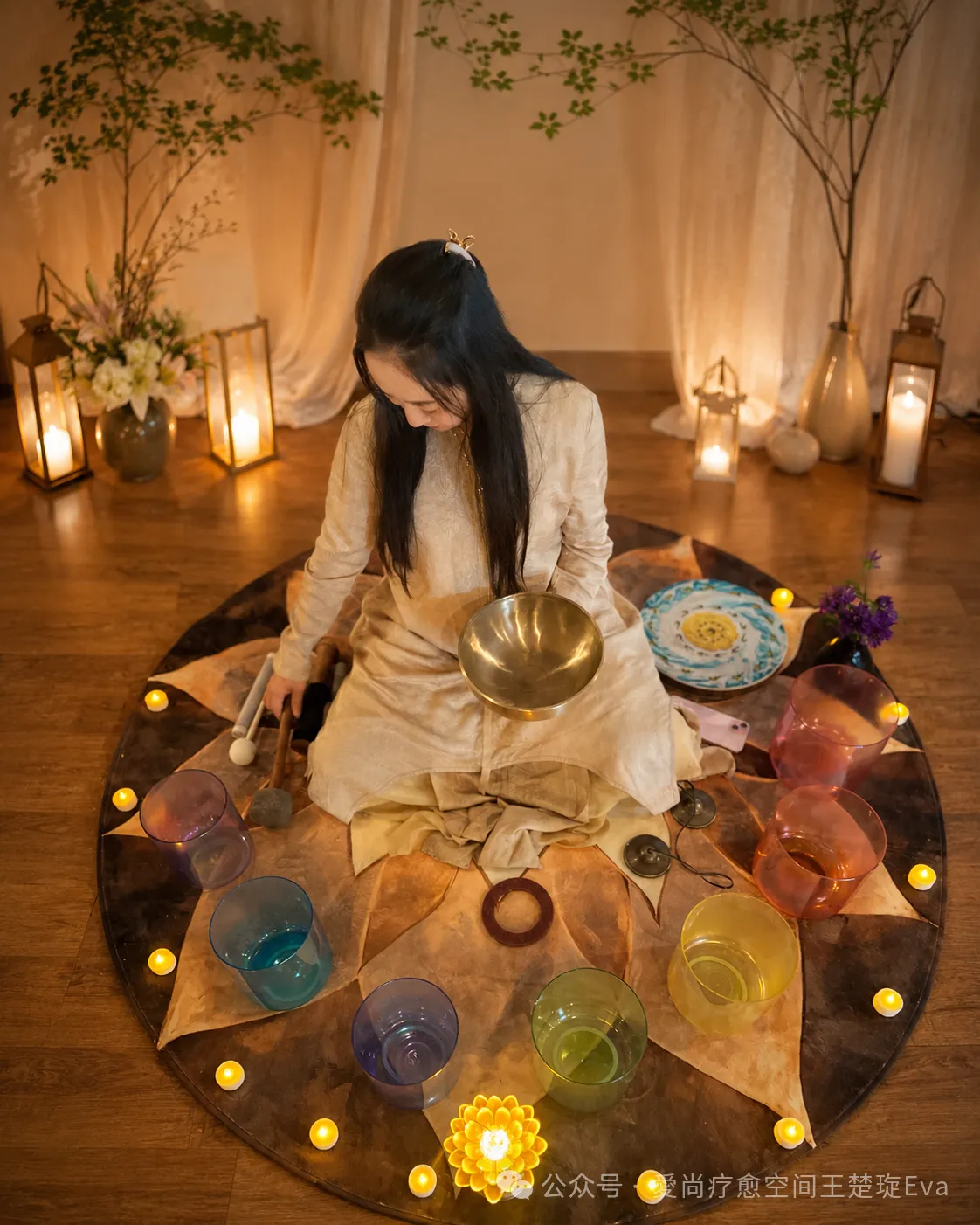
Striking or rubbing a singing bowl makes its body vibrate and produces an audible tone. A fundamental and its overtones unfold and fade, offering the attention somewhere to rest.
In a quiet setting, it may become easier to notice breathing, muscle tension or the support of a cushion. Sound, posture, rest, companionship and the environment may all contribute to the experience.
Sound can travel through different materials. However, the fact that the body contains water does not by itself establish that a singing bowl produces therapeutic resonance in cells, fascia or the spine. Listening to a sound bath is also different from a vibration intervention applied directly to the body.
Tingling, warmth or heaviness are not reliable measures of a relaxed nervous system or a treatment effect. Pause if you experience pain, persistent numbness or dizziness; discomfort need not be interpreted as a necessary “healing response.”
2. Understanding “brainwave frequency” with care
Brainwaves describe measured electrical activity. Bands such as alpha, beta and theta help researchers describe activity in different contexts; they are not a simple scale of good and bad brainwaves.
Beta activity is also involved in ordinary wakefulness, attention and thinking. It cannot simply be equated with anxiety or used alone to explain insomnia and fatigue. The acoustic frequency of a bowl and the frequency of brain electrical activity are different concepts.
A randomized study of 50 participants reported changes in anxiety ratings and physiological measures after a session. The singing-bowl group showed reductions in alpha power, rather than the simple pattern that relaxation must increase alpha. [1]
A separate 17-person experiment found brain-activity changes associated with the beat of a particular recording. [2] This limited finding does not establish that any bowl or frequency will reliably bring every listener into a specified brain state.
3. Let comfort guide the experience
If your shoulders feel a little easier, breathing feels less hurried or thoughts briefly stop demanding a response, that moment of rest is worth noticing.
Dozing off does not have one necessary explanation. Tiredness, a quiet environment, a comfortable position and relaxation may all play a part. Sleep alone does not prove that a frequency has “tuned” the brain.
Existing research offers preliminary clues about short-term relaxation. Samples, volume, playing techniques and study designs differ. How effects arise, how long they last and whether they consistently help sleep problems need further study.
There is no need to produce warmth, vibration or sleep to have a worthwhile experience. Having no unusual physical sensation can still mean giving yourself some quiet time.
4. Give yourself a little room to pause
At Love & Peace Space, we approach singing-bowl listening as a chance to care for yourself: gently returning attention to the present in a comfortable sound environment.
Choose a comfortable seated or lying position and notice your natural breathing. If a sound is uncomfortable, ask for a lower volume, increase your distance or take a break.
This experience does not replace diagnosis or treatment, promise to repair nerves or resolve insomnia, or guarantee that everyone will feel the same way.
What we hope to offer is time, space and an opportunity to listen to your own needs.
Sound can be a companion. Allowing yourself to pause comfortably is a gentle form of self-care.